Showing posts with label dog training. Show all posts

Wednesday, December 27, 2017

Welcome Home

The much anticipated arrival of your new puppy is an exciting event--  especially if you have never owned a dog before.  There are many different things to be considered before Spot comes home. What food should I get for him? Which toys will hold up to a vigorous chewing puppy? Should I get a crate? Collar style? Hopefully this post will answer some of those pressing questions.


Food:  Each breed and size is going to have a different required amount of food.  However, there are some guidelines that apply to all.  Don't leave the food down for your dog to graze on all day.  Feed your dog his portion in his crate (this helps to associate positive feelings with the crate) and leave him there.  After thirty minutes to an hour, take your dog directly to his spot and give him the elimination command.  This helps cut down on accidents as well as helps your dog to be regular.  We feed two times a day (three when they're younger).  Our favorite foods are either Diamond Naturals Chicken & Rice, or one of the Kirkland Signature Natures Domain.

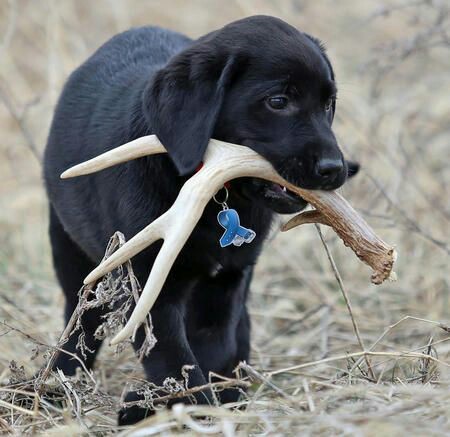
Toys: There are SO many different choices and variations for dog and puppy toys on the market. First of all, Many vets and pet stores will do their best to convince you that rawhide chew toys are healthy for dogs. This is majorly incorrect! Dogs are not able to digest rawhide.  The process that is used to make rawhide is highly toxic for any animal. Here is a link to a cute video about how rawhide products are made. We would recommend any Kong toys. Another natural alternative to rawhide are antler chews. They are completely natural, and the dogs love them! They are very clean, and don't have the mess that some natural dog toys have.  We also sometimes will get knuckle bones from the grocery store for a very special treat.


Crates: Dogs are den creatures.  We believe that crate training is highly important in a young pup's life. A crate gives them a place to call their own, and somewhere to go when they need time to themselves. It is also a place for them to sleep at night that keeps them out of trouble. While they will whine the first couple nights, stick to your guns and don't let them sleep with you. This will begin to teach the dog to settle, and prepare him for car trips in the crate or time at the kennel while you are on vacation.

Collar & Leash: Just like everything else, there are many different variations in collar and leashes. Our favorite collar style is called a martingale collar. This style provides more control over your dog without the choking effect of a slip collar. First choice for us in the leash world would be a multifunctional leash. They are very versatile and handy to use.

Beds: Soft cushy dog beds look so comfortable for your dog. And they are! But we've found that if you pair a puppy with a stuffed bed it often results in room that looks like it's covered in snow! The best choice we have found is what is called a Kuranda bed. Orthopedic, chew proof, and super easy to clean it is by far the best bed we have found for our dogs. This bed is what we use to teach place. It works perfectly because it is raised off the ground so the pup is either off or on the bed. No more slowly creeping away.

The addition of a puppy to your home is sure to bring much joy, laughter, and fun. But don't forget to be prepared for your new fur ball before he arrives! Everyone will be much happier if you do.


Sunday, October 22, 2017

Service or Cuddle Buddy?

"How do you decide if a pup is going to be a service dog or a companion dog?" This is a question we frequently receive from potential clients who are considering purchasing a dog from us. While all the dogs that we produce are incredible creatures, not every dog is perfect for the working life. The standards are so high for service dogs going through our program that we carefully identify pups with temperaments conducive to service dog training, detector dog training or those
better suited to in a
family dog life.

At seven weeks of age, we do what is called PAT testing, (Puppy Aptitude Test). We use a combination of the Volhard test and our own tests to determine if a pup has service potential or not. In addition to the Volhard test, we have added a couple problem solving and curiosity evaluations. Two of which are sound and smell tests. All of the tests are done in a room that the pup has never before been in, and the evaluator is a person the pup has never met. This helps to give a truer evaluation of who the pup is, and what his/her potential could be.

The Volhard test is a combination of tests that evaluate many different aspects of the puppy. Rated on a scale of one to six, they are tested on social attraction, social dominance, retrieving, as well as other things. Here is a video of one of our pups going through the Volhard section of the PAT test.

The expectation for a cuddle buddy is not nearly as intense as it is for a service animal. Since they don't have to be constantly working, and they don't need to have an incredible sense of smell, picking companion dogs is a much easier process. When we have puppies that have shown that they would better fit as a family dog, we will then look for a family, couple, or individual that best suits that particular puppy. Some pups have lots of energy and exuberance! Others are snuggle bugs and love to relax. We do our best to place pups with a family that matches their personality. Energy and wiggles thrives best in a busy family with active kids. The more relaxed calm puppy may do better with an elderly couple.
Sometimes we will have a puppy come through our program that is a bit higher drive. In those instances, we will do our best to place those pups in drug or explosive detection work. Detection dogs need to have an incredible sense of smell, while oozing confidence and work ethic. We have found our pups to excel in this line of work.

As you can see, there is much forethought, time, and energy expended as we do our best to place our Dutydog puppies and dogs in their ideal home.


Monday, July 11, 2016

Happy birthday!!!

Well, It's been a year since Jackie's most recent litter.  All the pups are doing fantastic!  This litter has landed jobs in all kinds of places!

Henry
Henry---This beautiful, settled black lab is still with us and continuing his training to be a Diabetes Alert Service Dog (DAD) for some fortunate individual. He loves to play, snuggle, and most of all WORK! He is such a problem solver, and loves to be out in public.


Daisy
Chester


Chester---Such a sweet boy!! He is in Wyoming being a fantastic companion/therapy dog for an older couple.  Like his brother, he is such a fantastic boy and bringing much delight to his people.


Daisy--Petite and smart, she is also in Wyoming devoting her life to a lady she was placed with about a month ago.

Remington
Remington--This hard worker is in Canada being trained as a narcotics, explosives, and cash detection dog.  Her trainer has glowing reviews for her, work ethic and intelligence!


Fun to look back and see where these dogs have gone and how they are thriving!


Henry & Chester

Daisy & Remington

Thursday, June 30, 2016

Curbing Destructive Chewing

The problem of chewing is prevalent in many dog owner homes.  Dogs, especially puppies, LOVE to chew.  For most puppies, however, they are not just being destructive, but trying to ease the pain of teething.  Providing them with safe, quality, toys they enjoy, will greatly diminish the temptation of your favorite slipper, the leg of your suede couch, or the garden hose.  

There are many different toys on the market, some that are durable and some that fall apart in the first week.  We love the Kong brand.  These toys will provide a challenge even for the most avid chewer.

For Christmas, we bought beef knuckle bones for our six month old pups.  You can pick them up at your local butcher for a reasonable price.  The dogs LOVE these!!!!! While we unwrapped presents,   we had a pup on "place" with one of these knuckle bones.  He stayed there for three hours!! He never even looked at all the tempting presents and paper flying around him.

A note on bones, you should never offer your canine friend cooked bones.  Cooking makes the bones brittle and more apt to splinter and cause choking.

Another reason dogs may be destructive, is an excess amount of energy.  A tired dog is a good dog.  ten minutes of ball retrieving, a good fast walk, or a jog may help your dog to quit destroying your home.   If you still are having problems after trying these, you may have a dog that doesn't fit your life style.  I know that might be a hard one to hear, but dogs have been bred for different purposes.   A husky was bred to run all day pulling a sled, while a shit-tzu is much happier sitting quietly in your lap.

Before you get that adorable lab mix your friends are giving away, think about your life style and how much time you will have to devote to him. Remember, a tired dog is a good dog!


Friday, June 24, 2016

Summer and Service Dogs

With summer already here the heat is quickly rising!  Although we can put on cooler clothes, our service dogs are stuck in their beautiful coats. Because of this, we need to keep in mind ways to keep our dogs cool.  Especially if the service that your dog is performing for you includes scent work.

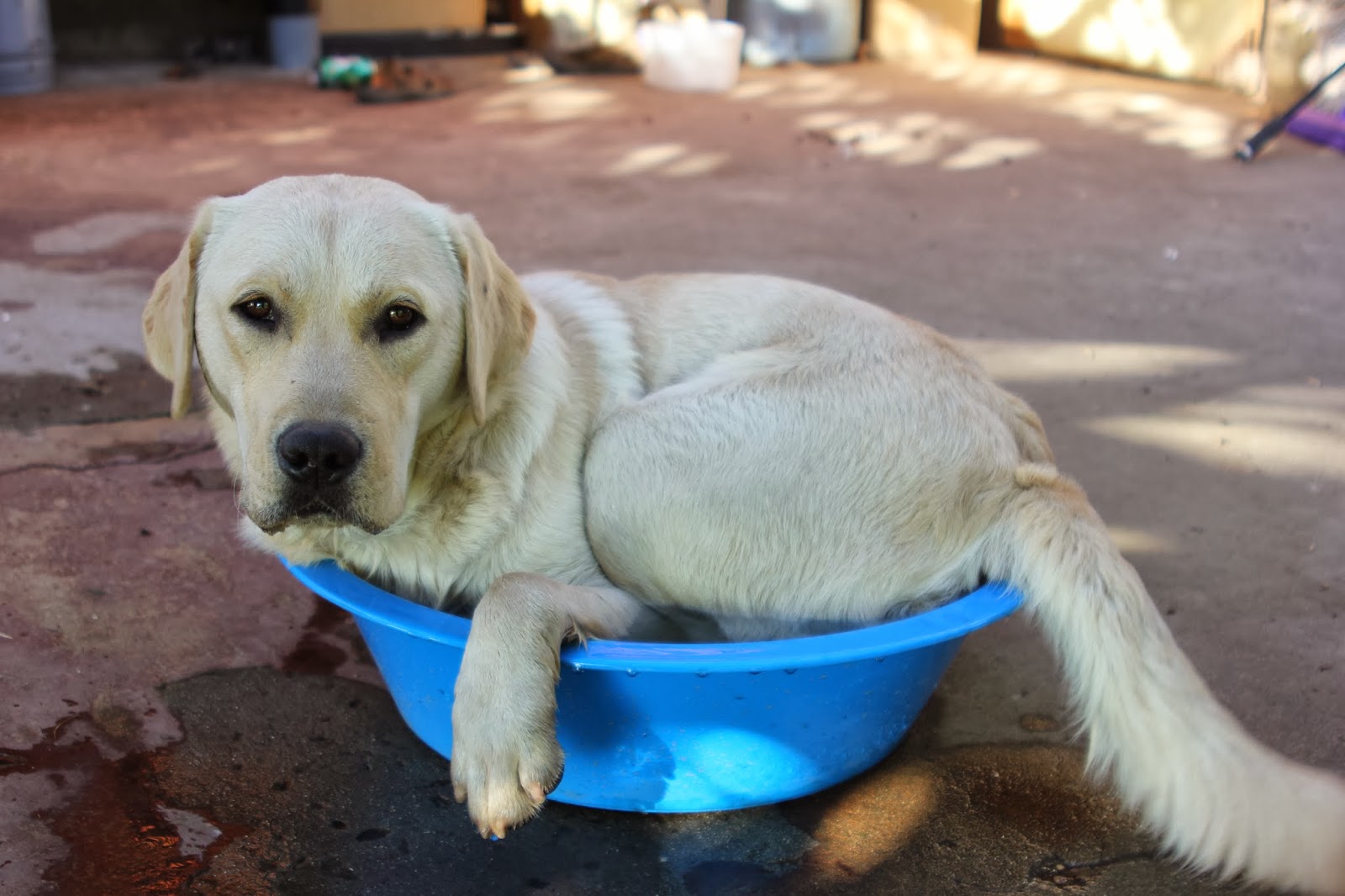
Unlike us, dogs don't have sweat glands and can only lose body heat through panting.  Keeping our dogs hydrated is imperative.  There are many different travel bowls/bottles that make watering your pup easy. Also, at home you might think about getting a wading pool if your dog loves to play in the water.

Another thing to keep in mind during summer is asphalt and concrete.  They get HOT!!! Next time you are in a parking lot and the temperature is above 85-90 degrees feel the asphalt with your bare hand or foot. This will give you a feel of what the dogs are dealing with on their poor paws.  Perhaps that is why your pooch doesn't want to get out of the car!  It BURNS! One way to deal with this if you are a passenger, is to have the driver drop you off at the entrance of wherever you are going.  This way you can greatly minimize contact with the hot asphalt. 

However, this may not be an option for you.  Many service dog websites carry dog booties.  These can be perfect for you and your dog to handle the summer heat.  Your dog may need some time to get accustomed to wearing them, and you may need to do a bit of training with him.  But it should help to take care of that hot asphalt on those paws.

                                       Stay cool and enjoy your summer!!


Tuesday, June 21, 2016

The Devoted Dog- Part 3, Training Weekend


Jason's large family headed north and joined our even larger family for a weekend of training, fellowship, and fun!

Upon seeing each other again, Timber happily rolled over and welcomed a good tummy rub from Jason.  She let him love on her awhile, but then she was right back at Jeremy's side.
Our daughter taught Jason how to make his own hands-free paracord leash.

What was intended to be a weekend to teach Jason how to scent train Timber, turned out to be a wonderful Type 1 Diabetes Retreat for both families.  Both of our families have lived with diabetes for several years and have established habits and routines.

I've been to Type 1 support group meetings and have many friends who also deal daily with the disease.  But to spend almost three days living together with another Type 1 family was an enormous blessing.  There was time to discuss so much that a family living with this condition deals with everyday that no one else can quite understand-- emotions upon initial diagnosis, transitioning primary care from parent to son,  watching them make mistakes, the scary lows and troublesome highs, managing supplies, and of course what to eat.  And cooking together was just fun!

Another highlight was seeing my son not be alone in his battle.  For once, he wasn't the only one in the room who had to check his blood and give a shot before he could enjoy popcorn with his movie on the big screen. Watching the boys compare numbers after a meal of Dreamfields pasta and enjoy a scrumptious Samoa cookie that was practically carb free (with no artificial sweeteners either) was just plain fun for this Mama.

Saturday morning, Jeremy gave Jason a step-by-step instruction on scent training.  After doing a session with Timber, he brought in Henry, our nine month old DAD-in-training to demonstrate.  This gave Jason a visual of what he was hoping to accomplish with Timber.

That afternoon, the dads, boys, and dogs went to town to work on Public Access.  Although Timber has good manners, it's important that the family be trained what to expect of her in public and how to handle certain situations.  Lunch out, a stop at the meat department of the grocery store, and some ping-pong at our Rec. Center provided great opportunities to work on what to expect of her in public settings.


 On Sunday morning, after a last scent training session between Jason and Timber, the families said good-bye.  The devoted little dog jumped into the mini-van and rode away with her new person.

Here are links to the other parts of Timber's story. Part 1 part 2.

Friday, May 6, 2016

Timber, Part 1

Can an old dog learn new tricks?  We'll see.

A few months ago we had an interesting inquiry.  A woman from a nearby town contacted us about a service dog that she had "inherited" so to speak.  It seems that Timber, a Blue Heeler/Australian Shepherd mix,  had been "working" for a veteran who had passed away.  Through a series of connections, Timber came to live with Sherry*.   Sherry had been fostering the dog for several months, but really desired for Timber to be serving in her given capacity as a service dog, although it wasn't clear exactly what service Timber performed.  She asked us to evaluate Timber as a Diabetes Alert Dog, because Sherry suspected that's what she was.

When Timber arrived, it was clear she was a Service Dog.  Her obedience was precise and she was completely tuned into her handler, following her every move.  However, when presented with the scent of low blood sugar, she gave a cursory sniff, but didn't get excited about it as our labs do.  Regardless, we agreed to work with Timber to see if she could develop or redevelop her nose for diabetes.

A word about Timber before proceeding.  This medium, reserved, white and black dog is so different from our lively, gregarious labradors.  Although she has an exceedingly sweet disposition, she is a one-person dog.  Once she decides who that one person is going to be, she establishes herself as a permanent shadow.

Sherry knew of a family with a Type1 teenage son in Colorado that she would like to see Timber serve, if indeed she was a DAD.  Both Sherry & Timber and a Duty Dog's team paid a visit to the family to see if it was a good match.

Timber picked Jason*, the T1D as her person. Good start.  And Jason, of course, fell in love with this devoted little dog that dutifully followed him everywhere during her weekend trial.

It was decided that Timber would come and spend a few weeks with Duty Dogs and work on scent training.  And so, Timber found herself north in Wyoming once again.


Friday, January 23, 2015

When Puppy Comes Home-- Intro.

Many of us feel that a family just isn't quite complete without a dog.  These creatures can truly add such joy and delight to our family memories.  Eventually, the dog becomes like a family member and you barely know that he's there.

However, that dog snoring on the hearth doesn't happen over night. Introducing a puppy into a home is a big adjustment, especially if the family is new to dogs.  Although a 6-month old puppy may look like an adult dog, it's NOT! It's very important to understand that dogs don't begin to lose their puppy status until they are TWO years old!  It is unrealistic to expect that older pup to behave like his three year old sire.  Thankfully, knowledge is power and knowing what to expect from your new friend can help ease the learning-curve (and hopefully preserve the furniture and carpet).

In an effort to help those who are anticipating a new canine addition, we are going to begin a series of posts that will explain expectations and preparation for this new adventure.  Items such as potty-training, feeding, sleeping, chewing, place, and training will all be addressed in separate posts.

Before your puppy comes home, you need to have your home prepped and ready for your new pooch.

YARD:  Your dog needs to be safe in your home and on your property.  Make sure the area you have for your dog is fenced adequately. Your curious creature will discover things that you didn't even know you had!  A few things to be aware of are poisonous plants, propane tanks and lines, the garbage containers, and other items that could present a hazard to your dog.

HOUSE:  If you intend to have your dog inside at all, then this area needs to be adequately prepared as well.  Minimize things on the floor (baskets, decorations, food storage, etc.).  Have a family meeting to discuss the importance of everybody doing their part.  This is a great motivation for family members to put things where they belong-- shoes, socks, toys, books, and so forth.  Dogs WILL eat socks and pass them through to the other side.  However, a sock tangled up in the intestine would amount to a very sick dog and a sizable vet bill!

Stay tuned for more about When Puppy Comes Home coming soon.


Saturday, November 8, 2014

Break Time

This post has nothing to do with resting, but everything to do with relieving.  One of the  basic functions of dogs, and one of the most frustrating issues of the owner of the untrained dog, is eliminating.  We call this "taking a break."  However, with consistency and attention, you can equip your dog with the skills to eliminate on command.

Meal Time:  By keeping meal times consistent, you establish routine and predictability in your dog.  We feed our dogs every morning after their initial "break".  We feed them the same amount every meal.  Normally, they wolf their food down in minutes; any uneaten kibble is removed from the crate and not offered again until dinner (or for training purposes).

"Good break, puppy!"
Break Time:  After we've finished our breakfast, we have someone on duty to take the dogs out for another "break".  Generally, this is about an hour after feeding. This has allowed the dogs to consume and digest their meal.  The person on duty leads the pups over to the "Break Area" and says, "Take a break."  Because we have done this every single time since we moved here three months ago, the dogs know that this is where they eliminate and they are ready to perform.  We just count seven "poops" until we know that everyone is finished, and then we take them up to the kennel for their morning session.

Every time we transition the dogs from crate to kennel, kennel to crate, or take them for a training session, we visit the "Break Area" for them to do their business.  This establishes routine and quickly forms a habit for them.

This week I took a young pup to town to be my shopping buddy.  At this point our pups are just over four months old.  He looked so handsome with his black coat gleaming under his red "Service Dog in Training" vest.  Between stores I told him to "break" in a designated place.  I was so proud of him when he immediately began doing his thing.  Confidently, I entered the store, assured that he wouldn't be doing anything naughty once inside.

Dogs instinctively like to keep their "den" clean.  We rarely have messy crates (I can only remember cleaning two since we've been here), and when they do have an accident it's either because of a sick dog or a handler that waited too long.

Training in public
Canines are creatures of habit and will eliminate in the same area, even without being trained.  Their sensitive snouts can smell things that we can't, and will find the odors associated with elimination.  That's why it's imperative to clean any messes in the house immediately and thoroughly, because they will return to that spot and do it again.

And finally, when you do take your dog into public, be prepared.  We always have little doggie bags tucked away in our service vests for public breaks.  This is just being responsible and respectful of others.

Well, it's been an hour since the dogs were fed, so it's time to go "take a break"!
Socializing at a Family Fun Day


Wednesday, September 17, 2014

Basic Training Begins


We’re so busy training puppies, that there’s just enough time for the rest of life—cooking, cleaning, and schooling!  But, we have a lot to share that’s transpired in the last month of our puppies’ lives.


We left via Yosemite.
Cody, just outside of Yellowstone.
Three weeks ago, we traveled one thousand miles from California to Wyoming with eleven dogs and six children. That experience has its own blog post in case you missed it.  Needless to say, it was an experience we won’t soon forget!


A pit-stop in Nevada

Since then, we’ve settled into our new location in Cody, Wyoming and hit the ground running!  Basic obedience training began two weeks ago for each of the puppies who were just at the 10 week mark.  It is so rewarding to train a smart dog!  

We have a training rotation in place to rotate all of the future service dogs between our four lead trainers.  This allows each of us to concentrate on one or two dogs each week (depending on the trainer) and really develop a connection with that dog.  Then the next week, we rotate dogs so that each dog is experiencing a different handler and their different training mannerisms.  Although we all as trainers have a consistent method of training, we are each unique in our particular style.  This gives the dogs the opportunity to adjust to different personalities and respond appropriately.
A junior trainer ready for action.

Always ready for training.
As I worked with my charge today, a sweet chocolate male who reminds us of his Papa Bailey, I was quite pleased with how well he had “come”, “sit”, and “down” mastered.  We worked on “stay” and he picked it up so quickly and eagerly.  These dogs are so eager to work and pick up basic obedience readily.  As with child training, consistency and kindness accompanied with firmness are key elements to successful training.
Kindness and Consistency are Key for children and dogs!


Saturday, September 13, 2014

From Yosemite to Yellowstone

Recently our family of eight took a road trip-- and brought our eleven dogs.  Leaving California via Yosemite National Park,
we traveled to Cody, Wyoming arriving through Yellowstone National Park.

As if traveling with six children didn't already require tons of forethought, throw in nine puppies!!  The two groups complemented each other nicely however, both requiring about the same amount of time between pit-stops.
Pit-stop outside of Yellowstone

Somebody had a birthday along the way!
Since all 19 of us couldn't fit into the blue van, we drove two vehicles-- the van and the truck pulling a cargo trailer with all the stuff!!  One extra-large crate of puppies went in the truck and two crates of the same size went in the back of the van.  It actually worked perfectly and the puppies traveled marvelously. 

We began crate-training the puppies at night a few weeks prior to our trip, so they would be comfortable in their "dens".  This proved valuable, because there was very little whining heard from the puppies (nor from the humans-- they were NOT in crates) for the entire 1000 miles.

Pit-stop in Nevada
We stopped every two hours for a stretch break and potty stop.  We tried to avoid places where other travelers would take their pets for a "break" to keep germ exposure low for our puppies.  Since most of the drive was very rural, this wasn't hard to do.  Thankfully, we didn't have a single messy crate to clean the entire trip, although we were prepared with rags, paper towels, and plastic bags should the need arise.

Pit-stop in Wyoming

Something smells good. . .
Of course, we had to camp along the way.  It's hard enough to find a motel that will accomodate our large family, without throwing in eleven dogs!  The KOA in Cody, Wyoming was especially hospitable.  In addition to their lovely grounds, free pancake breakfast, and very low fee, they let us check-out late in the day without charging us extra.  The kids and dogs had a great time!

Pit-stop at a park in Idaho.
We were so proud of the dogs-- they weren't a nuisance at all to any of our neighbors, although we certainly attracted attention and visitors wherever we went!  It felt like the circus was rolling into town!


HAPPY!
                             Needless to say, we were ALL very happy to roll into Wyoming!

Friday, May 23, 2014

Saturday, April 12, 2014

Dog Books

There are many reading sources on the market concerning dogs, dog training, dog breeding, dog health, and many other things pertaining to dogs.  We have found some great books that we wholeheartedly endorse. Two of our favorites are both written by a lady who been in the dog training arena for over 40 years~ Debby Kay knows what she's talking about when it comes to scent training!  The Super Sniffer Drill Book is a great book if you want to do any kind of scent work with your dog.  The other, The Super Sniffer Hand Book is geared more towards training medical service dogs.  Both of these books are very reliable and we use them every day in our training.

If you are entering the dog breeding circles there is another book by Debby Kay called The Labrador Breeders Handbook that is a great addition to your bookshelf.   Dog Breeders Professional Secrets is another great book for your breeding program, it is very informational and interesting.

However, not many people are going to need these books for their bookshelf.  Most dog owners are just wanting a well-trained dog that minds its manners and can do a few cool tricks.  So far our favorites are written by the Monks of New Skete. They have written some great books about creating the best home for you and your dog.  They teach many things about training and raising puppies and dogs.  Smellorama! Nose Games for Dogs is also a very fun book to entertain you and your dog.

Enjoy your puppies this spring season!!!!

Wednesday, March 12, 2014

Assistance dogs; why shouldn't they be protective?

Assistance or medical dogs are very helpful in a variety of ways. They can do everything from alerting on cancer in a person to bringing the TV remote to their handler.  However, there is one thing that an assistance dog should NEVER be allowed or trained to do~ being protective of their handler.  Although this may sound like it would be very helpful for someone often alone in a rough part of town, this protectiveness may also cause the dog or handler to lose his life.

Imagine this;
    A young women in her twenties is walking down the street with her well-trained seizure alert dog. Dusk is falling and she is on her way to her job, a night shift in a rough part of town. This young lady, whom we will call April, is feeling very safe because of her adorable new seizure alert dog. Because of this dog, April has gotten her seizures under control.  They are a great team and have bonded well together. All of the sudden April slips, and falls to the ground! Her head slams into the concrete sidewalk and she is knocked unconscious!  A worried bystander hurries over to see what's the matter.  However, April's dog suddenly goes into protective mode. He will not let anyone close enough to see what's the matter or help her.  Paramedics are called and they arrive in record time.  However, this dog is not relenting at all from his protective state.

What might happen to this dog or his handler?
The dog may have to be tranquilized or even put to sleep, so that help can be administered to April.  Worse yet, April's protective companion may cause help to be so late that she may have major complications or even die!

This is why we do NOT train ANY service dogs to be protective of their handlers or aggressive in any way. Service dogs should be friendly with everyone and never even growl at another dog or human, no matter what it may be up to.   Hence the reason you will never find any of our dogs named "Killer".


Posted by dutydogs.com

Thursday, February 27, 2014

Jackie


what now?
Say hello to Jackie!  She is our petite, sweet, 14 month old, dark chocolate lab that we acquired from Chilbrook Labradors in West Virginia.  We chose to add her to our breeding program because of her great lineage. Jackie has 13 generations of service dogs in her history!  Her father Ranger, is an amazing dog. Being a champion in nearly every way possible, he is a spectacular dog!


Jackie is being trained as a DAD (Diabetic Alert Dog) service dog.  This training is great for intelligent Jackie, as it gives her a job to do. It also gives her a future as a possible DAD, because we can place her as a DAD when we are finished using her in our breeding program.   This training benefits everyone.  She has also learned helpful tasks such as getting a juice out of the fridge and bringing the blood glucose meter to her handler.

at the dentist


We are very proud of our hardworking agile girl and are looking forward to seeing her puppies in the future!


Bailey and Jackie
   

training
working

Saturday, November 23, 2013

Introducing: Duty Dogs

Years ago our 4 year old son was diagnosed with Type 1 Diabetes.  Thus our journey into the Diabetic Community began.

Initially, we were shocked and somewhat dismayed at the thoughts of a life with diabetes management playing a central role.  However while at Children's Hospital we quickly realized the fact that our son's disease was manageable.  This was not necessarily the case for many of the boys and girls who watched prone in their beds as he rode around the halls on the hospital tricycle.  I was struck at the understanding that soon we would be taking our son home and many of these children would not return to their earthly homes.  This acquiescence began the process of God building gratefulness in our hearts for our son's condition of insulin dependency and for the tools used to enhance management.  We thank Jesus for the many tools at our disposal helping overcome the challenges this disease presents.

The most unique tool is a K9 monitor, Bailey.  Known as a Diabetic Alert Dog or more accurately a Diabetes Alert Dog.  We are proud breeders and trainers of these wonderful canine assets.  You can see more about our Duty Dogs by going to www.dutydogs.com.  Diabetes alert dogs help diabetics by smelling their changes in blood glucose or blood sugar.  The dogs can be trained to alert on highs or lows.  Thus helping to mitigate the extreme swings that are found in every T1D's life.  Lowering the peaks and raising the valleys of these extremes will help to lower the A1C results, thus lowering the risk of long term complications consistent with the disease.

This can be especially helpful for diabetics who suffer from hypoglycemic unawareness.  This condition causes one to not realize when their blood sugar levels are dropping dangerously low. Type 1 Diabetics who suffer from this condition are often found in need of support from the wonderful servants tied to the 911 services.

We are delighted to train dogs specifically to serve people with this condition.  A diabetes alert dog can help a diabetic return precious liberty and peace of mind back to their life.  These wonderful K9 monitors often allow the trips to the ER to be dramatically reduced for their diabetic handlers.

For more information on the offerings of DAD dogs visit our Duty Dogs website.