Thursday, November 16, 2017

Ten Things Only a Lab Owner Would Understand

Here are 10 things that we think make the Labrador the most popular dog in America. If you own a Lab, you will completely understand what we are talking about.

1. Your Lab lives for chasing a ball or toy. He will constantly bring to you anything he can get his mouth around so you can throw it for him. 


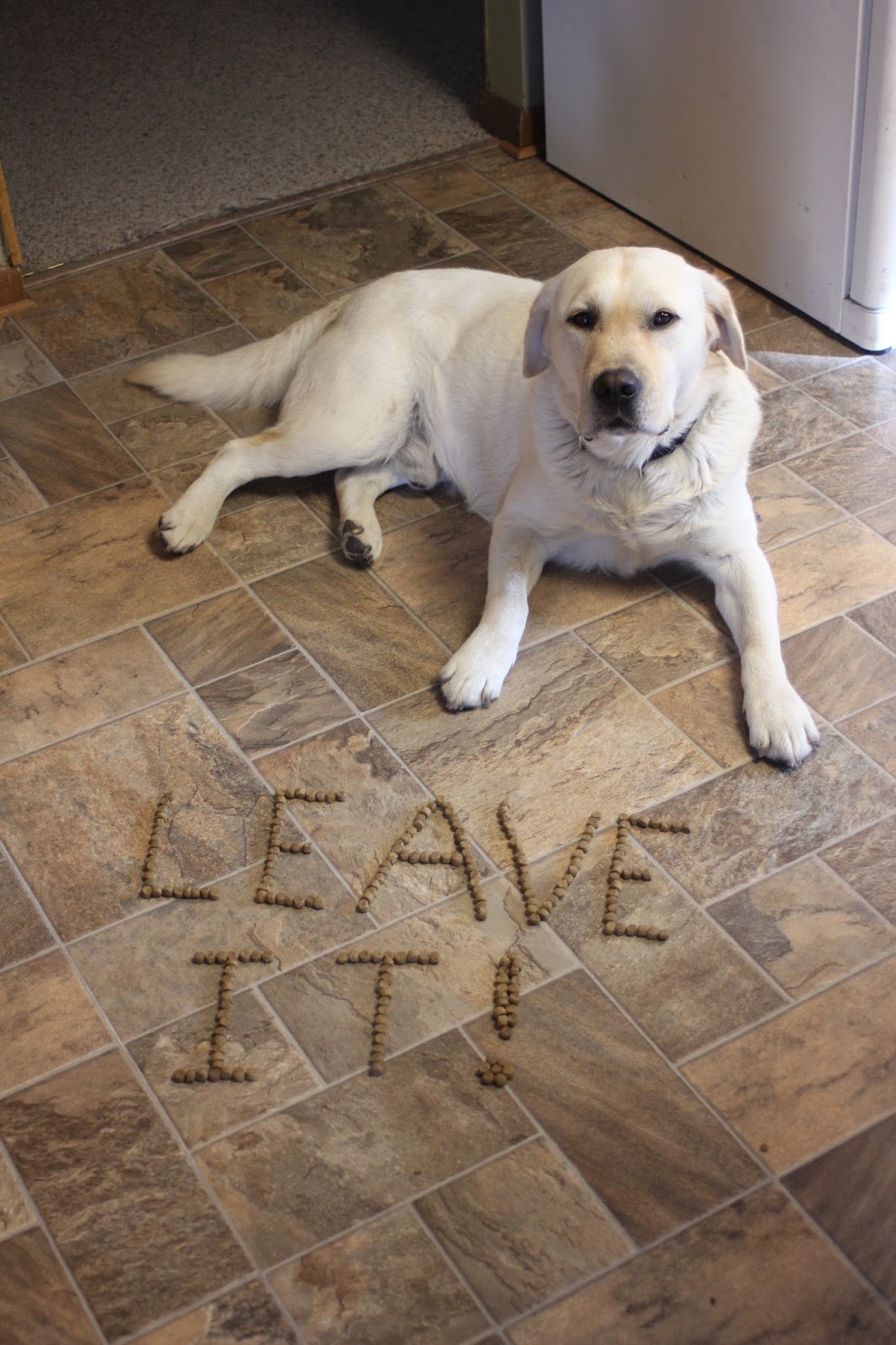
2. You don't have to worry about having a "picky eater." More than likely your lab will be happy to eat anything and therefore you know better than most how to teach the "leave it" command! 

3. Your Lab may be half the size of you! Yet he still is convinced he is a lap dog. 


4. You have the most loyal sidekick ever; he'll go everywhere and anywhere with you. 


5. You're no stranger to doggy kisses. In fact your face is probably covered in them constantly. 


6. There is no keeping you Lab out of nearby water. Whether a clear lake, a stinky cow pond, or his water bowl, your dog thinks he must be in it. Better hope you have a mud room! 


7. PLAY PLAY PLAY! Your Lab probably wants to play with you constantly! No matter how you are feeling. 


8. Your Lab has no concept of his cold nose, he loves to poke your bare skin whenever he can! 


9. More than likely your lab loves to make friends. You better make sure he never tries to say hi to a grumpy puppy! 


10. Your lab is a cuddle monster! He would get under your skin if he could! 


Any thing I have missed about a Labrador? Let me know in the comments! 


Sunday, October 22, 2017

Service or Cuddle Buddy?

"How do you decide if a pup is going to be a service dog or a companion dog?" This is a question we frequently receive from potential clients who are considering purchasing a dog from us. While all the dogs that we produce are incredible creatures, not every dog is perfect for the working life. The standards are so high for service dogs going through our program that we carefully identify pups with temperaments conducive to service dog training, detector dog training or those
better suited to in a
family dog life.

At seven weeks of age, we do what is called PAT testing, (Puppy Aptitude Test). We use a combination of the Volhard test and our own tests to determine if a pup has service potential or not. In addition to the Volhard test, we have added a couple problem solving and curiosity evaluations. Two of which are sound and smell tests. All of the tests are done in a room that the pup has never before been in, and the evaluator is a person the pup has never met. This helps to give a truer evaluation of who the pup is, and what his/her potential could be.

The Volhard test is a combination of tests that evaluate many different aspects of the puppy. Rated on a scale of one to six, they are tested on social attraction, social dominance, retrieving, as well as other things. Here is a video of one of our pups going through the Volhard section of the PAT test.

The expectation for a cuddle buddy is not nearly as intense as it is for a service animal. Since they don't have to be constantly working, and they don't need to have an incredible sense of smell, picking companion dogs is a much easier process. When we have puppies that have shown that they would better fit as a family dog, we will then look for a family, couple, or individual that best suits that particular puppy. Some pups have lots of energy and exuberance! Others are snuggle bugs and love to relax. We do our best to place pups with a family that matches their personality. Energy and wiggles thrives best in a busy family with active kids. The more relaxed calm puppy may do better with an elderly couple.
Sometimes we will have a puppy come through our program that is a bit higher drive. In those instances, we will do our best to place those pups in drug or explosive detection work. Detection dogs need to have an incredible sense of smell, while oozing confidence and work ethic. We have found our pups to excel in this line of work.

As you can see, there is much forethought, time, and energy expended as we do our best to place our Dutydog puppies and dogs in their ideal home.


Sunday, October 1, 2017

Genetic Testing

Diseases. Sickness. Genetic problems. Dysplasia issues. There are so many difficulties and complications that can arise in the dog breeding world.  Thankfully, with the incredible growth of technology over the past decades, breeders have had the ability to control more and more genetic issues in the dogs they produce. Through selective breeding, genetic testing, and thorough research into pedigrees, many of the genetic diseases common to Labradors can be eliminated completely in a breeder's lines. If you are considering purchasing a puppy from anyone, be sure and ask if they have done genetic testing ,and if so, which tests. Whether they have or haven't should give you a better idea of the breeder's integrity and ethics.  A dependable trustworthy dog breeder will be striving to provide the most quality dogs possible, and doing everything in their power to better their breed.

Here are some of the genetic diseases and concurring tests common to the Labrador breed:

Exercise induced collapse (EIC)
Progressive Retinal Atrophy (PRA)
Centronuclear  myopathy (CNM)
Retinal dysplasia/Oculoskeletal dysplasia (RD/OSD)
Hereditary Nasal Parakeratosi (HNPK)
Dwarfism (SD2)
Degenerative myelopathy (DM)
There are many more, but these are the core tests a Labrador breeder should be testing for. 


There are also exams that can be done by a certified veterinarian that will show a tendency towards hip and elbow dysplasia. These can be done through PenHip or Orthopedic Foundation for Animals (OFA)  

Thursday, May 11, 2017

Top Rookie Drug Dog!

We're so proud of one of our dogs that was trained for narcotics detection. On top of MANY busts, she has placed top rookie drug dog in the state of Texas! She aced all the tests with flying colors!

Tuesday, March 14, 2017

Jackie's Puppy Pictures

Jackie has done it again! She had seven beautiful pups on Feb 22.  Four of them are chocolates and three are black.  They are going quickly, so be sure and contact us if you are interested in one of Jackie's pups.


Monday, July 11, 2016

Happy birthday!!!

Well, It's been a year since Jackie's most recent litter.  All the pups are doing fantastic!  This litter has landed jobs in all kinds of places!

Henry
Henry---This beautiful, settled black lab is still with us and continuing his training to be a Diabetes Alert Service Dog (DAD) for some fortunate individual. He loves to play, snuggle, and most of all WORK! He is such a problem solver, and loves to be out in public.


Daisy
Chester


Chester---Such a sweet boy!! He is in Wyoming being a fantastic companion/therapy dog for an older couple.  Like his brother, he is such a fantastic boy and bringing much delight to his people.


Daisy--Petite and smart, she is also in Wyoming devoting her life to a lady she was placed with about a month ago.

Remington
Remington--This hard worker is in Canada being trained as a narcotics, explosives, and cash detection dog.  Her trainer has glowing reviews for her, work ethic and intelligence!


Fun to look back and see where these dogs have gone and how they are thriving!


Henry & Chester

Daisy & Remington

Thursday, July 7, 2016

Service dog rights

As we have placed more and more dogs with clients,  questions involving a service dog's rights are constantly popping in our email, social media, texting, and voice messages. That's great! It means people are wanting to know the right way to do things, and are trying to stay informed. So, we decided a post with FAQs and answers would be a fantastic idea!  There will also be links to more information at the end.

These questions and answers are taken from the ADA website (www.ada.gov) and our good friend at www.k9wings.com


Q1 What is a service animal?
A: Under the ADA, a service animal is defined as a dog that has been individually trained to do
work or perform tasks for an individual with a disability. The task(s) performed by the dog must be
directly related to the person’s disability.


Q2 What does “do work or perform tasks” mean?
A: The dog must be trained to take a specific action when needed to assist the person with a disability. For example, a person with diabetes may have a dog that is trained to alert him when his
blood sugar reaches high or low levels. A person with depression may have a dog that is trained
to remind her to take her medication. Or, a person who has epilepsy may have a dog that is
trained to detect the onset of a seizure and then help the person remain safe during the seizure.

Q3 Are emotional support, therapy, comfort, or companion animals considered service animals under the ADA?
A: No. These terms are used to describe animals that provide comfort just by being with a
person. Because they have not been trained to perform a specific job or task, they do not
qualify as service animals under the ADA. However, some State or local governments have
laws that allow people to take emotional support animals into public places. You may check
with your State and local government agencies to find out about these laws.
 
       Q4 Are service-animals-in-training considered service animals under the ADA?
        A: No.Under the ADA, the dog must already be trained before it can be taken into public
       places. However, some State or local laws cover animals that are still in training.
       (Be sure and check with your state on these laws!)
 
Q5 Does the ADA require that service animals be certified as service animals?
A: No. Covered entities may not require documentation, such as proof that the animal has
been certified, trained, or licensed as a service animal, as a condition for entry.

Q6 My city requires me to register my dog as a service animal. Is this legal under the ADA?
A: No. Mandatory registration of service animals is not permissible under the ADA. However, as stated above, service animals are subject to the same licensing and vaccination
rules that are applied to all dogs.

Q7 Are restaurants, bars, and other places that serve food or drink required to allow service
animals to be seated on chairs or allow the animal to be fed at the table?
A: No. Seating, food, and drink are provided for customer use only. The ADA gives a person with a disability the right to be accompanied by his or her service animal, but covered
entities are not required to allow an animal to sit or be fed at the table.
   
 Q8 Do apartments, mobile home parks, and other residential properties have to comply
        with the ADA?
       A: The Fair Housing Act is the Federal law that protects the rights of people with disabilities
      in residential facilities. For information or to file a complaint, contact the       U.S. Department of Housing and Urban Development at 1-800-669-9777.  
          
      Well, that hopefully answers some questions you may have had, if you have more 
      please go to www.k9wings.com and look for the links button.  Also, you can go to the 
      ADA website www.ada.gov or call toll free at 800-514-0301.